
Artificial Intelligence in Modern Military Conflicts
Introduction: The Rise of Artificial Intelligence in Modern Military Conflicts
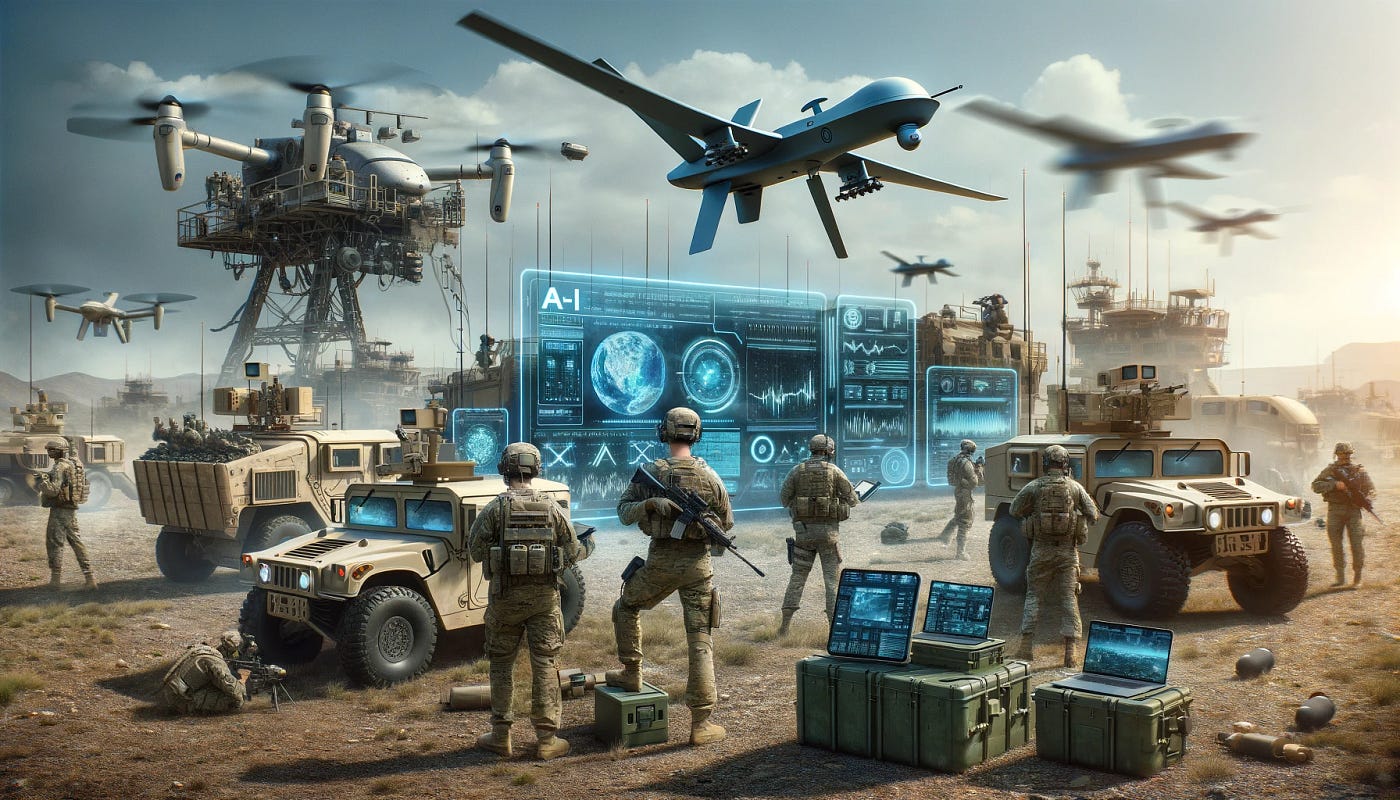
In the 21st century, artificial intelligence in modern military conflicts has emerged as a decisive factor shaping how wars are fought. Unlike traditional warfare, which relies on infantry, tanks, and aircraft, AI introduces automation, precision, and predictive capabilities that transform battlefield strategy. Today, military forces worldwide are integrating AI to improve decision-making, enhance surveillance, and develop autonomous weapons systems.
Moreover, AI allows nations to respond faster to threats while minimizing human risk. From target recognition in drones to predictive logistics and cyber defense, AI is fundamentally redefining the digital and physical domains of warfare.
For readers who want to explore how AI is also being applied to broader cybersecurity strategies, check this detailed guide by the World Economic Forum. It explains how artificial intelligence improves national and organizational cybersecurity defenses.
In this article, we will explore how AI is being applied in modern military conflicts, the technologies involved, the ethical challenges, and the implications for global security.
The Evolution of Artificial Intelligence in Military Conflicts
Early Developments of AI in Military Technology
Artificial intelligence has gradually evolved from research laboratories into military applications. Initially, AI was used in simulations and predictive analytics, helping military planners model battle scenarios and improve logistics. Over time, AI moved into weaponry, surveillance, and cybersecurity, offering unprecedented operational advantages.
For instance, AI-powered systems can analyze massive amounts of data from satellites, drones, and reconnaissance missions, allowing commanders to make informed decisions quickly. As AI evolved, so did its ability to integrate into real-time battlefield operations, enhancing both offense and defense.
AI-Powered Decision-Making in Conflicts
One of the most impactful applications of AI military technology is in decision-making. Modern AI algorithms can process battlefield information faster than human teams, providing actionable insights within seconds.
For example, AI systems can analyze:
- Enemy troop movements
- Supply chain vulnerabilities
- Predictive strike outcomes
- Potential collateral damage
This data-driven approach ensures that commanders can optimize strategies, reduce risks, and react swiftly in dynamic combat environments.
Applications of AI in Modern Military Conflicts
AI in Autonomous Weapon Systems
Perhaps the most controversial area of AI in warfare is autonomous weapon systems. These systems, often called “lethal autonomous weapons”, can identify and engage targets without direct human intervention.
- Drones and unmanned aerial vehicles (UAVs): AI allows drones to conduct reconnaissance missions, track targets, and even carry out strikes.
- Robotics and unmanned ground vehicles: These systems can navigate hazardous terrains while performing combat or logistics tasks.
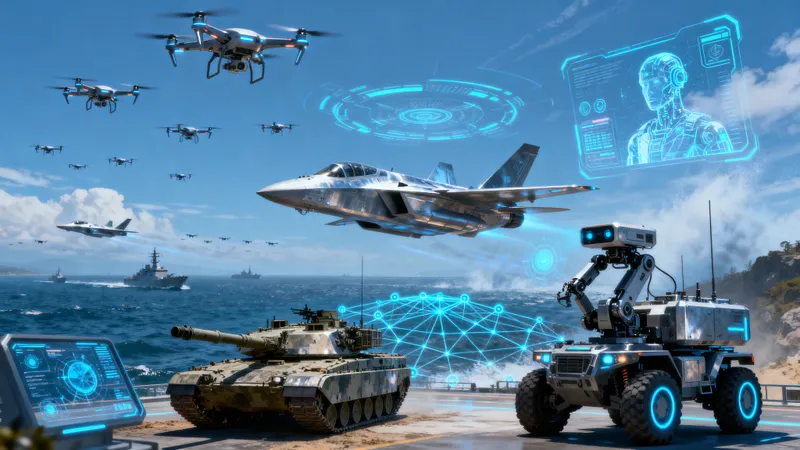
However, the use of autonomous weapons raises ethical questions, including accountability, decision-making, and the risk of unintended escalation. For more insights on global perspectives regarding AI weapons, see the United Nations Office for Disarmament Affairs.
AI in Surveillance and Reconnaissance
Surveillance and reconnaissance have always been critical in warfare. AI now enables advanced pattern recognition, facial recognition, and threat detection from drones, satellites, and other sensor networks.
For instance:
- AI-powered systems can detect enemy troop movements or vehicle convoys in real time.
- Predictive analytics can anticipate potential attack strategies.
- Automated threat detection reduces the need for human monitoring, saving both time and lives.
Thus, AI transforms raw battlefield data into actionable intelligence, giving armed forces a significant advantage.
AI in Cyber Warfare
Another significant aspect is AI cyber warfare, where AI defends networks or targets adversary systems. AI can:
- Detect malware or intrusion attempts faster than traditional methods
- Launch automated countermeasures
- Analyze network traffic to predict future cyber attacks
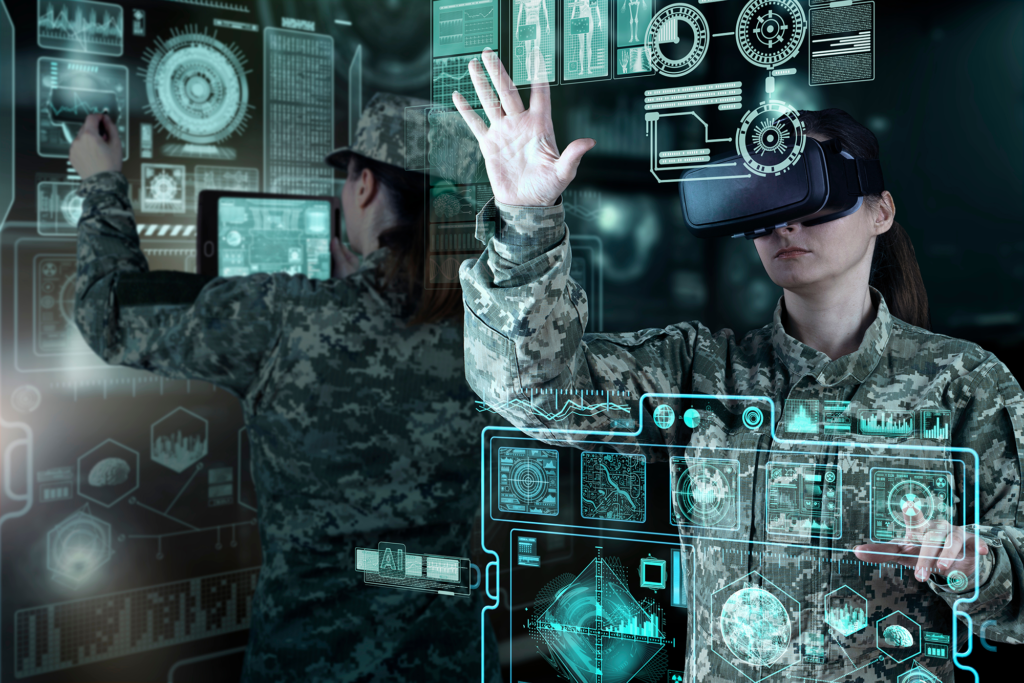
This makes AI indispensable in modern conflicts, especially since cyber operations often precede or accompany traditional military engagements. For a deeper dive into AI in cyber warfare, you can explore this guide from MIT Technology Review, which explains how AI strengthens both offensive and defensive cyber capabilities.
AI and Predictive Warfare: The Future Battlefield
Predictive Analytics for Military Strategy
Predictive AI models are changing how armies anticipate enemy actions. By analyzing historical patterns and real-time intelligence, AI can forecast:
- Potential attack vectors
- Likely enemy responses
- Optimal deployment strategies
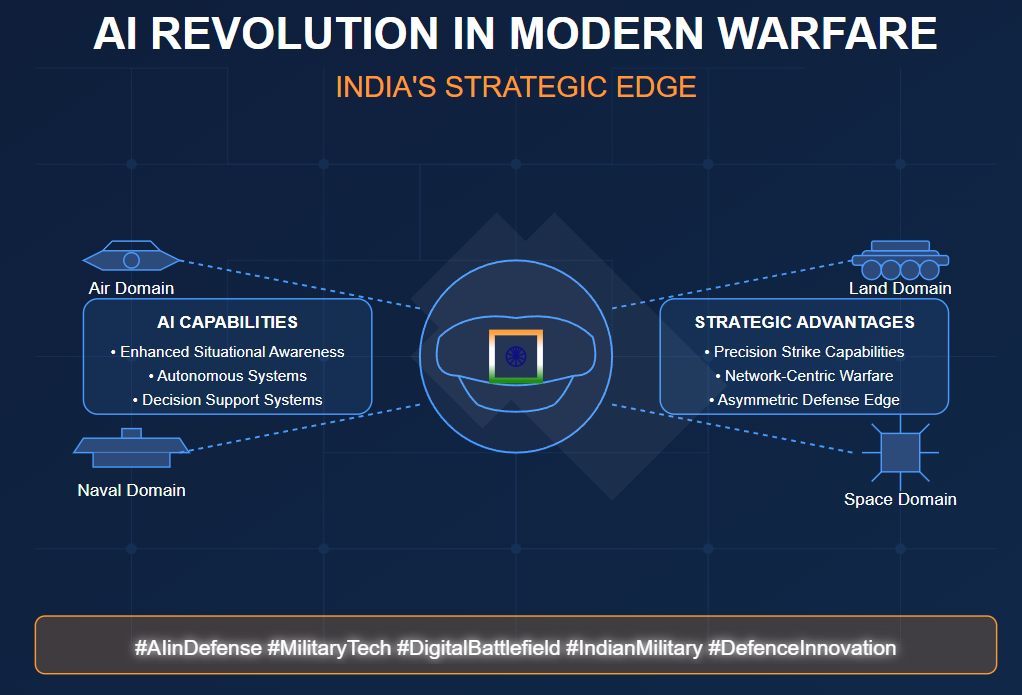
This predictive capability allows forces to reduce casualties, optimize resources, and act proactively rather than reactively.
AI in Simulation and Training
Artificial intelligence also transforms military training. Simulated battlefields powered by AI enable soldiers and commanders to:
- Test strategies in virtual environments
- Analyze potential outcomes of various tactics
- Train in high-risk scenarios without real-world consequences
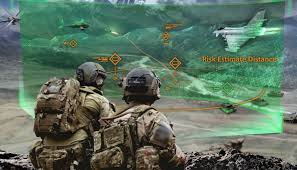
Consequently, AI ensures that modern militaries can prepare more effectively for complex conflict environments.
Ethical and Legal Challenges of AI in Warfare
Accountability and Autonomous Decisions
One major concern is who is responsible when AI systems make lethal decisions. Autonomous weapons may act without human oversight, raising serious ethical and legal questions.
Moreover, international laws have yet to fully regulate AI-powered warfare, making accountability unclear in cases of civilian casualties or unintended strikes.
Risk of Escalation and Unintended Consequences
AI systems can operate faster than humans, which could escalate conflicts unintentionally. For example, automated defense systems may misidentify threats, leading to unintended retaliation.
Experts warn that as AI becomes more embedded in warfare, robust safety protocols and international agreements will be essential to prevent global instability.
Real-World Examples of AI in Modern Conflicts
U.S. Military AI Programs
The United States has invested heavily in AI military technology. Programs such as the Project Maven analyze drone footage using AI algorithms to identify targets faster and more accurately than human analysts.
Additionally, AI systems are integrated into naval vessels, fighter jets, and defense satellites, enhancing predictive and operational capabilities.
AI in Other Nations’ Military Programs
Iran, China, Russia, and Israel are also developing AI-powered military programs. These include:
- Autonomous drones and missile systems
- AI-driven cyber warfare units
- AI-enhanced reconnaissance satellites
Consequently, global military AI competition is intensifying, making AI a critical factor in geopolitical strategy.
Transitioning AI from Laboratory to Battlefield
The deployment of AI in real conflicts is not instantaneous. It requires:
- Rigorous testing and validation
- Integration with existing command and control systems
- Continuous human oversight to ensure compliance with ethical standards
Thus, AI in modern military conflicts represents both an opportunity and a challenge for armed forces globally.
Future Trends in AI Military Technology
Autonomous Swarm Technology
One emerging trend is autonomous swarm systems, where multiple AI-powered drones or vehicles coordinate in real time to execute complex missions.
- Advantages include scalability, redundancy, and resilience
- Challenges involve ensuring safe communication and preventing unintended consequences
AI in Decision Support Systems
Future AI will increasingly support high-level strategic decision-making. Advanced algorithms may:
- Evaluate millions of potential actions in seconds
- Recommend optimal strategies to commanders
- Reduce human error and cognitive overload
Integration with Quantum Computing
Quantum computing may enhance AI military capabilities, particularly in:
- Cryptography and secure communications
- Real-time optimization of battlefield strategies
- Large-scale simulations
This integration could reshape the future of warfare, making AI even more powerful and complex.
Frequently Asked Questions (FAQs) About Artificial Intelligence in Modern Military Conflicts
1. What is artificial intelligence in modern military conflicts?
Simply put, artificial intelligence in modern military conflicts refers to the use of AI technologies to enhance military operations. These include autonomous weapons, predictive analytics, cyber defense, and surveillance systems. In other words, AI allows armed forces to analyze data faster, improve precision, and make informed decisions in real time.
2. How is AI used in autonomous weapons and drones?
Firstly, AI enables drones and other autonomous systems to identify and track targets with minimal human intervention. Additionally, these systems can navigate complex terrains, carry out reconnaissance missions, and even execute strikes based on programmed objectives. Consequently, AI-powered autonomous weapons reduce risks for human soldiers while increasing battlefield efficiency.
3. Can AI influence cyber warfare in conflicts?
Yes, AI plays a crucial role in modern cyber warfare. For example, AI can detect malware, prevent intrusions, and launch automated counterattacks. Moreover, predictive AI algorithms can anticipate potential cyber threats before they occur. Therefore, AI is both an offensive and defensive tool in contemporary conflicts.
4. What are the ethical concerns of using AI in warfare?
One significant concern is accountability. When AI systems make autonomous decisions, it becomes challenging to determine responsibility for unintended harm. Furthermore, AI may escalate conflicts faster than humans can intervene. Consequently, ethical frameworks and international regulations are increasingly important to ensure responsible AI deployment in military contexts.
5. How is AI changing future battlefield strategies?
AI transforms warfare by introducing predictive analytics, simulation-based training, and real-time decision support. For instance, AI can model hundreds of possible scenarios and recommend the optimal course of action. As a result, future conflicts may rely more on data-driven strategies than traditional human judgment alone.
Further Thoughts: The Growing Impact of AI on Warfare
Looking forward, artificial intelligence in modern military conflicts is likely to become even more central to global security strategies. Moreover, as AI technology advances, autonomous systems, predictive analytics, and cyber defense tools will integrate seamlessly into modern armies.
Furthermore, AI is not limited to physical combat. Information warfare, including AI-driven surveillance and cyber operations, is shaping the digital dimension of modern conflicts. Consequently, nations that fail to adopt AI technologies risk falling behind both technologically and strategically.
In addition, international cooperation and regulations will be critical. Without robust global standards, the risk of AI-driven escalation, misidentification of threats, or unintended consequences may increase. Therefore, understanding and responsibly integrating AI into military strategy is essential for both policymakers and defense experts.
Ultimately, AI is reshaping the very nature of warfare. From autonomous drones to predictive battlefield strategies, AI will continue to influence not only how wars are fought but also how peace and security are maintained. As technology evolves, staying informed about AI in military contexts will be increasingly important for governments, defense organizations, and global citizens alike.
Conclusion: Artificial Intelligence as the Future of Warfare
In conclusion, artificial intelligence in modern military conflicts is reshaping how nations approach strategy, defense, and operational efficiency. From autonomous weapons to cyber warfare and predictive analytics, AI introduces new opportunities and ethical challenges.
Moreover, as AI technology advances, nations that fail to integrate it effectively risk falling behind on both battlefield strategy and digital security.
The rise of AI in military conflicts signals a broader truth: war is no longer only physical t is increasingly digital, automated, and predictive. Understanding AI’s role in these conflicts is essential for policymakers, defense strategists, and the global public.
For further insights into how AI shapes global security, consider reading this in-depth analysis by RAND Corporation, which examines the implications of AI on military decision-making and defense systems